Get Your Laying Hens on Track this Flocktober
Sep 01, 2022
Marissa Eekhoff & Ellie Moser
2022 Feed Interns
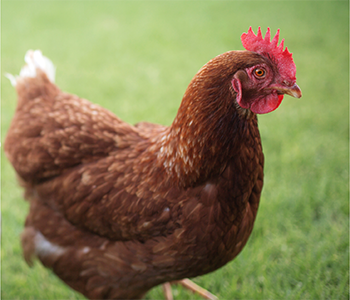
The chicks you bought this spring are now hens, and it’s time for them to start laying eggs! As your chickens reach 18 weeks of age and start slowly laying, it’s important to remember that their nutritional needs have changed. To produce quality eggs, your hens need more calcium in their diets.
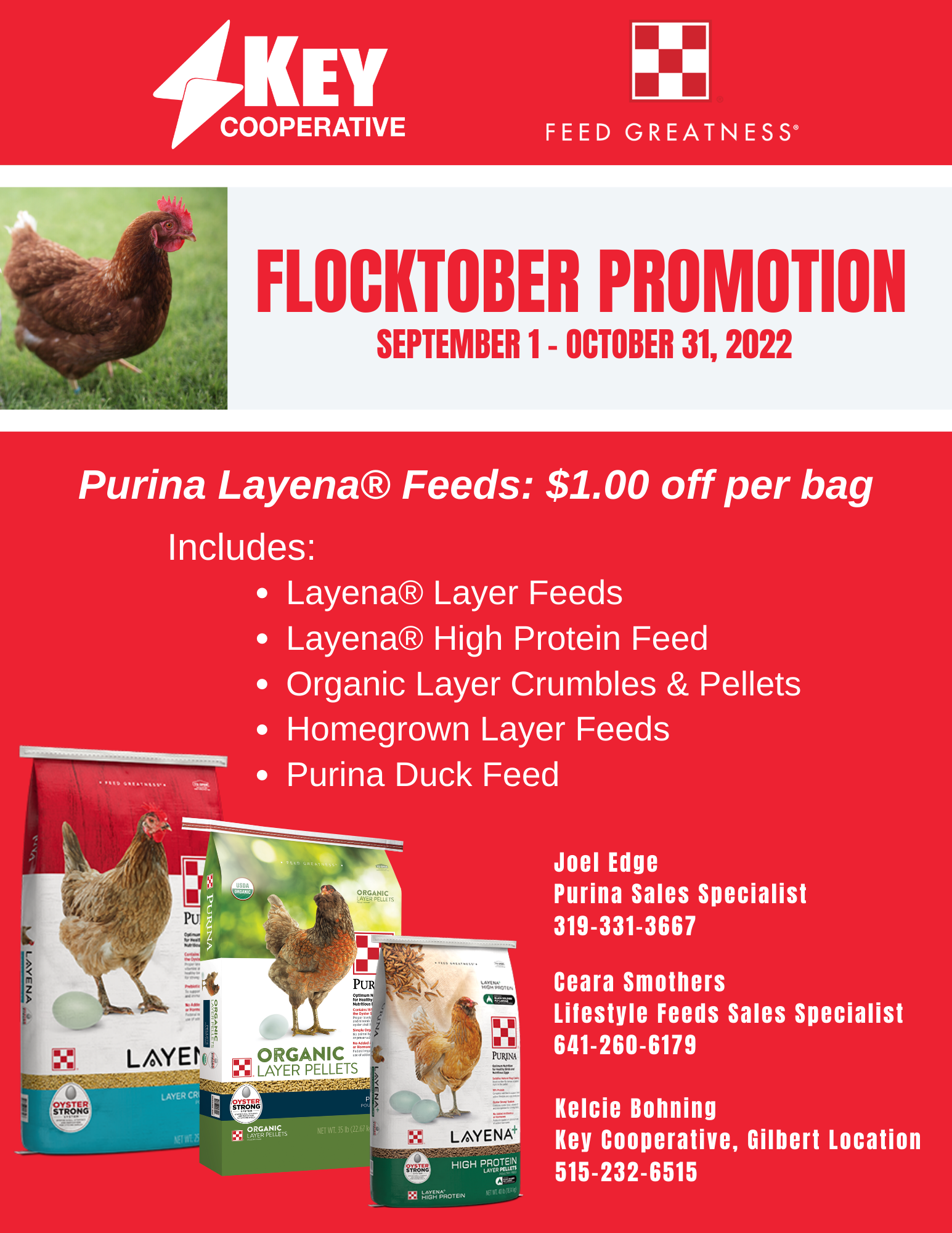
In addition to mixing our own layer feed, Key Cooperative also carries several high-quality Purina® layer products. For first-time layers, we highly recommend the Purina Layena® feed line. All Layena products use the Oyster Strong® System for an extra boost of calcium (3.25–4.25 percent). This blend of oyster shell, vitamin D and manganese helps promote strong-shelled eggs. Another option for hens of all ages is the Purina Home Grown® Layer feed. This complete feed provides slightly less calcium (3–4 percent) than the Purina Layena feeds, but it still includes 16 percent protein and all the necessary nutrients for optimal egg production.
Treats and other scratch grains are important for keeping your chickens busy. To encourage natural pecking behavior, we recommend the Purina Flock Block®. This whole-grain supplement makes a great treat for laying hens and other poultry. Key Cooperative customer Bob Roseland says his hens like their Flock Block: “They seem to get bored being penned up, and it gives them something to do. It keeps them busy, and it lasts a lot longer than throwing scratch grain on the ground.”
If you have questions about feeding your new laying hens, the Key Feed team can help. We’re here to assist you with raising a healthy flock, whether you have chickens, geese, ducks or even peacocks!
2022 Feed Interns
The chicks you bought this spring are now hens, and it’s time for them to start laying eggs! As your chickens reach 18 weeks of age and start slowly laying, it’s important to remember that their nutritional needs have changed. To produce quality eggs, your hens need more calcium in their diets.
In addition to mixing our own layer feed, Key Cooperative also carries several high-quality Purina® layer products. For first-time layers, we highly recommend the Purina Layena® feed line. All Layena products use the Oyster Strong® System for an extra boost of calcium (3.25–4.25 percent). This blend of oyster shell, vitamin D and manganese helps promote strong-shelled eggs. Another option for hens of all ages is the Purina Home Grown® Layer feed. This complete feed provides slightly less calcium (3–4 percent) than the Purina Layena feeds, but it still includes 16 percent protein and all the necessary nutrients for optimal egg production.
Treats and other scratch grains are important for keeping your chickens busy. To encourage natural pecking behavior, we recommend the Purina Flock Block®. This whole-grain supplement makes a great treat for laying hens and other poultry. Key Cooperative customer Bob Roseland says his hens like their Flock Block: “They seem to get bored being penned up, and it gives them something to do. It keeps them busy, and it lasts a lot longer than throwing scratch grain on the ground.”
If you have questions about feeding your new laying hens, the Key Feed team can help. We’re here to assist you with raising a healthy flock, whether you have chickens, geese, ducks or even peacocks!