Spotlight on Plant Health
Jul 24, 2023
Alex Branderhorst
Sales Agronomist
BY NOW, MANY (if not all) of you have heard of tar spot. It’s a newer disease in corn that has taken the agronomy world by storm. If you’ve never seen the disease in person, you will soon because it continues to spread west across the Corn Belt. Let’s take a closer look at tar spot and how we can mitigate it.
What is tar spot?
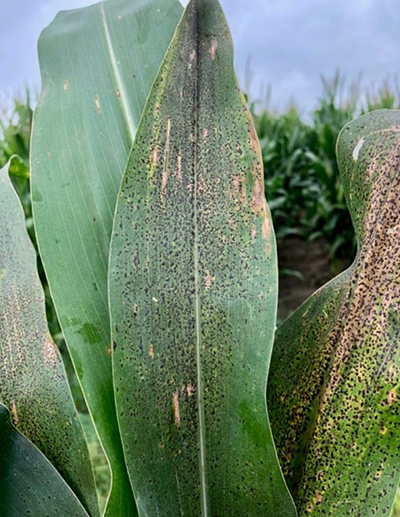
Tar spot is a foliar fungus that causes raised black spots on corn leaves, stalks and husks. It was originally detected in Indiana in 2015. Since then, it has spread west into Iowa. Eastern Iowa has taken the brunt of the disease thus far; however, tar spot continues to trek west, and the rest of the state should take notice. In fact, it has shown up in central parts of the state.
What does tar spot look like?
Symptoms of tar spot include small dark-colored spots on the leaf surface. The spots cannot be wiped off the leaf. In severe cases, these spots cause significant loss of leaf tissue, which is important for photosynthesis.
What conditions favor tar spot?
Tar spot loves moisture! Plants are more susceptible to tar spot when leaves stay wet for more than seven hours. Temperature and humidity also play a role. Tar spot prefers cooler (60°–70°F) and humid conditions. Continuous cornfields are also at higher risk for tar spot infection.
What are the implications of tar spot?
In severe cases, there can be 60 bu./acre yield loss. Tar spot reduces photosynthesis, which can cause premature dying off of the plant due to cannibalization of the stalks. This can lead to lodging and poor standability come harvest.
How do you protect the corn plant?
There are ways to protect against tar spot. At Key Cooperative, we offer premium fungicides to mitigate tar spot and other diseases. Miravis Neo, Veltyma® and Delaro® Complete are all great options for protecting your corn crop and alleviating any stress that may come.
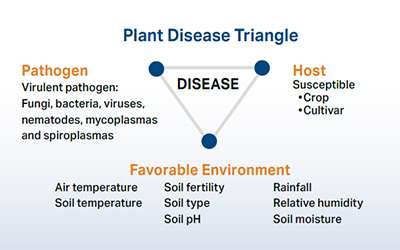
Always keep the disease triangle in mind. Talk to your Key Cooperative Agronomist about tar spot management and any other disease questions you have.
Sales Agronomist
Tar Spot in Corn
BY NOW, MANY (if not all) of you have heard of tar spot. It’s a newer disease in corn that has taken the agronomy world by storm. If you’ve never seen the disease in person, you will soon because it continues to spread west across the Corn Belt. Let’s take a closer look at tar spot and how we can mitigate it.
What is tar spot?
Tar spot is a foliar fungus that causes raised black spots on corn leaves, stalks and husks. It was originally detected in Indiana in 2015. Since then, it has spread west into Iowa. Eastern Iowa has taken the brunt of the disease thus far; however, tar spot continues to trek west, and the rest of the state should take notice. In fact, it has shown up in central parts of the state.
What does tar spot look like?
Symptoms of tar spot include small dark-colored spots on the leaf surface. The spots cannot be wiped off the leaf. In severe cases, these spots cause significant loss of leaf tissue, which is important for photosynthesis.
What conditions favor tar spot?
Tar spot loves moisture! Plants are more susceptible to tar spot when leaves stay wet for more than seven hours. Temperature and humidity also play a role. Tar spot prefers cooler (60°–70°F) and humid conditions. Continuous cornfields are also at higher risk for tar spot infection.
What are the implications of tar spot?
In severe cases, there can be 60 bu./acre yield loss. Tar spot reduces photosynthesis, which can cause premature dying off of the plant due to cannibalization of the stalks. This can lead to lodging and poor standability come harvest.
How do you protect the corn plant?
There are ways to protect against tar spot. At Key Cooperative, we offer premium fungicides to mitigate tar spot and other diseases. Miravis Neo, Veltyma® and Delaro® Complete are all great options for protecting your corn crop and alleviating any stress that may come.
Always keep the disease triangle in mind. Talk to your Key Cooperative Agronomist about tar spot management and any other disease questions you have.