Add to Your Flock During Chick Days!
Jan 22, 2026
Every Box of Chicks is Full of Potential
Order Chicks from Key Cooperative!Planning to order chicks this spring? Skip the extra steps and let us handle the details! Place your order with us, we’ll coordinate with Hoover’s Hatchery and notify you when your chicks arrive.
Pre-Order: February 1 - March 31
Order chicks from Hoover’s Hatchery through Key Cooperative during February or March 2026 and receive $10.00 off a 50 lb. bag of Purina® Chick Starter!
Pick Up: At Your Key Location
Chicks will be available for pick up at your Key location. Guaranteed refund or replacement within a 48-hour period after arrival.
Call Today!
Kelcie Carpenter
Key Cooperative, Gilbert Feed Sales
Kelcie.Carpenter@keycoop.com
515-520-1962
Jim Hawkins
Lifestyle Feed Sales
James.Hawkins@keycoop.com
641-990-8964
Click to view.
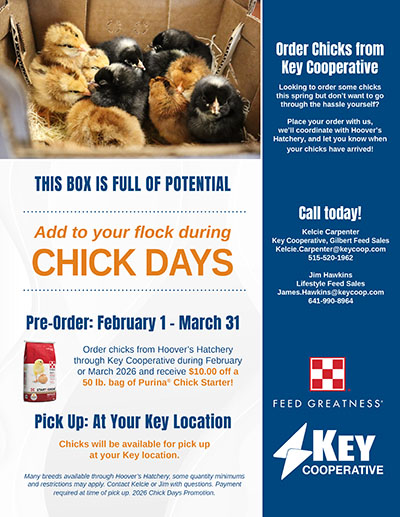
*Many breeds available through Hoover’s Hatchery, some quantity minimums and restrictions may apply. Contact Kelcie or Jim with questions. Payment required at time of pick up. 2026 Chick Days Promotion.
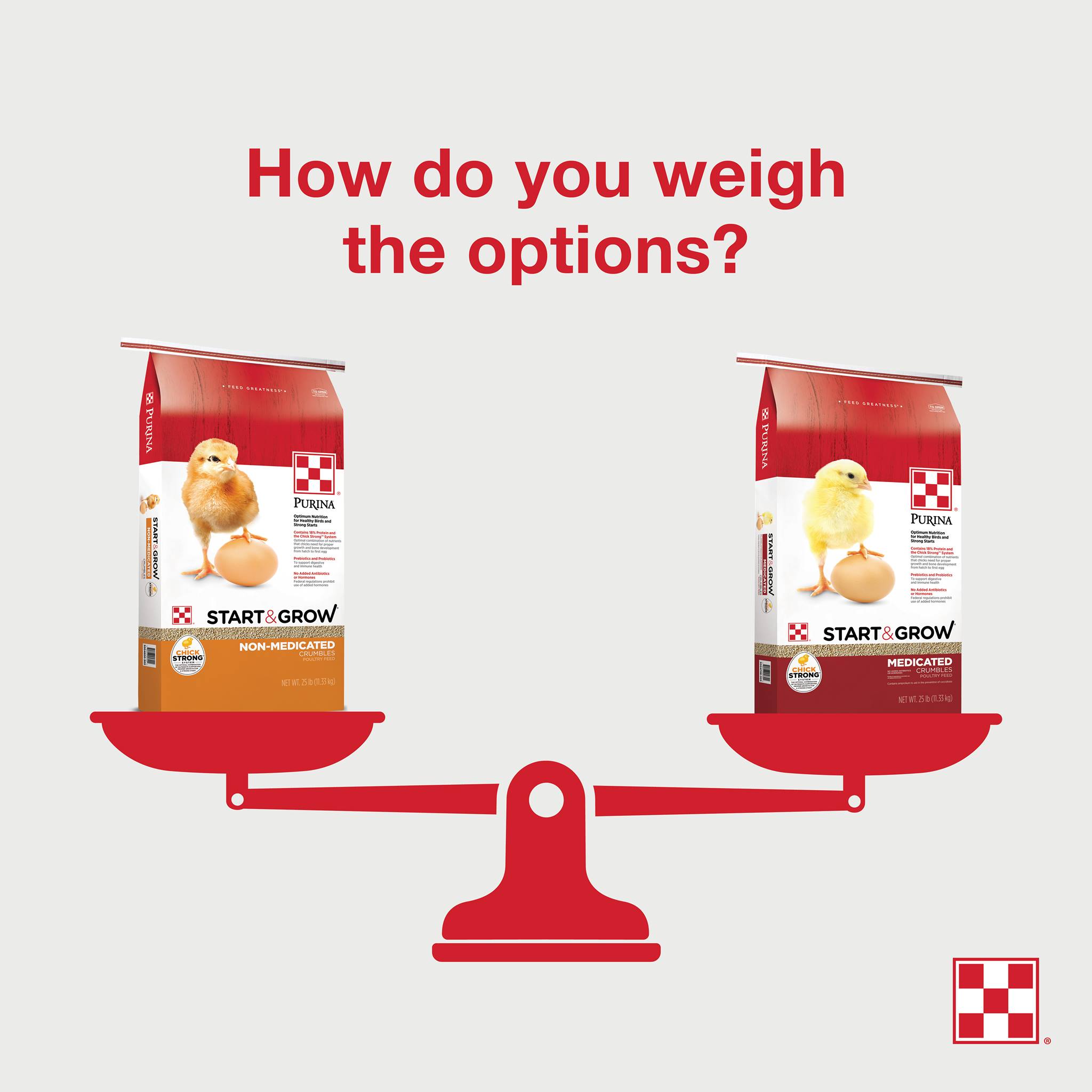
Medicated vs. Non-medicated Feed: Which is best for your chicks?
Ultimately, it all comes down to whether your chicks have been vaccinated against coccidiosis, one of the most common diseases chickens face.
 For chicks vaccinated for coccidiosis: Purina® Start & Grow® Non-Medicated For chicks not vaccinated for coccidiosis (or if you are unsure of vaccination status): Purina® Start & Grow® Medicated
We recommend Purina® starter feeds because they include everything your baby chicks need, no need to add anything else.
Contact the Key Feed team and we’ll help you find the right feed for your chicks!