The Market Is Giving Producers the Opportunity to Get Caught Up on Sales
Mar 03, 2026
Jarod Lemper
Grain Division Manager
THERE WAS MORE ACTIVITY this past month than you would typically think of for the month of February. As I looked out the window, I was often greeted with sunshine. Dry fertilizer tenders rolled in and out many days. Our crew even loaded a bean train bound for Mexico on a 65-degree day!
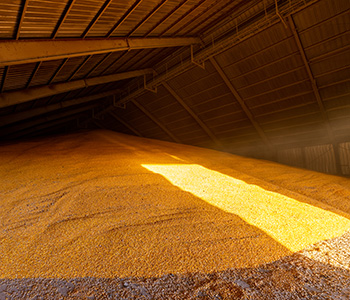
Logistically, we are well on our way toward shipping the 2025 crop out of the facilities. Of the 13 outdoor corn piles, 7 have been picked up and 2 more will be started shortly. If all goes as planned—and it doesn’t always—we will have another four or five completed by the end of March. Traditionally, the large center fill pile in Nevada is the last to go. I’m happy to say that the quality of the grain coming off the piles has been great. Much of the grain has gone to local processors right from the piles, which saves another elevation, with the balance being directed to the rail loading facilities in Nevada and Newton.
Market wise, we’re about a month past the January crop report that put a damper on market direction. In that report, the USDA found another 1.3 million harvested corn acres and added another half a bushel an acre to the average yield. At the same time, they added 100,000 to the harvested soybean acres and dropped export estimates by 60 million bushels. Needless to say, the markets reacted quite negatively to this report. The subsequent February report added 100 million bushels to corn exports, thus lowering carryout. It left the soybean carryout unchanged at 350 million bushels.
There’s been a lot of information out in the last six weeks that has added some significant volatility to the market. By the time you read this, the March report will either have just come out or will be out shortly. On top of that, we will be anxiously awaiting the planting intentions report that comes out at the end of March. The corn market dropped almost 25 cents the day of the January report, and the soybean market was already at lows not seen since mid-October. Since then, the corn market has recovered almost 50 percent of that daily drop, while the soybean market has rallied over 80 cents. New crop corn futures are within 10 cents of the high traded in early June, and new crop soybean futures are within 20 cents of the June highs.
My point in all of this is that the market is giving the producer the opportunity to get caught up on sales. If you find yourself undersold on your old crop bushels or feel like you are a little behind in new crop marketing, now is a good time to evaluate where you are before you get busy in the field.
There are many tools to use for your marketing needs, each with unique features that fit many different situations. If you have questions, please reach out to a member of the Key Origination team.
Grain Division Manager
THERE WAS MORE ACTIVITY this past month than you would typically think of for the month of February. As I looked out the window, I was often greeted with sunshine. Dry fertilizer tenders rolled in and out many days. Our crew even loaded a bean train bound for Mexico on a 65-degree day!
Logistically, we are well on our way toward shipping the 2025 crop out of the facilities. Of the 13 outdoor corn piles, 7 have been picked up and 2 more will be started shortly. If all goes as planned—and it doesn’t always—we will have another four or five completed by the end of March. Traditionally, the large center fill pile in Nevada is the last to go. I’m happy to say that the quality of the grain coming off the piles has been great. Much of the grain has gone to local processors right from the piles, which saves another elevation, with the balance being directed to the rail loading facilities in Nevada and Newton.
Market wise, we’re about a month past the January crop report that put a damper on market direction. In that report, the USDA found another 1.3 million harvested corn acres and added another half a bushel an acre to the average yield. At the same time, they added 100,000 to the harvested soybean acres and dropped export estimates by 60 million bushels. Needless to say, the markets reacted quite negatively to this report. The subsequent February report added 100 million bushels to corn exports, thus lowering carryout. It left the soybean carryout unchanged at 350 million bushels.
There’s been a lot of information out in the last six weeks that has added some significant volatility to the market. By the time you read this, the March report will either have just come out or will be out shortly. On top of that, we will be anxiously awaiting the planting intentions report that comes out at the end of March. The corn market dropped almost 25 cents the day of the January report, and the soybean market was already at lows not seen since mid-October. Since then, the corn market has recovered almost 50 percent of that daily drop, while the soybean market has rallied over 80 cents. New crop corn futures are within 10 cents of the high traded in early June, and new crop soybean futures are within 20 cents of the June highs.
My point in all of this is that the market is giving the producer the opportunity to get caught up on sales. If you find yourself undersold on your old crop bushels or feel like you are a little behind in new crop marketing, now is a good time to evaluate where you are before you get busy in the field.
There are many tools to use for your marketing needs, each with unique features that fit many different situations. If you have questions, please reach out to a member of the Key Origination team.